
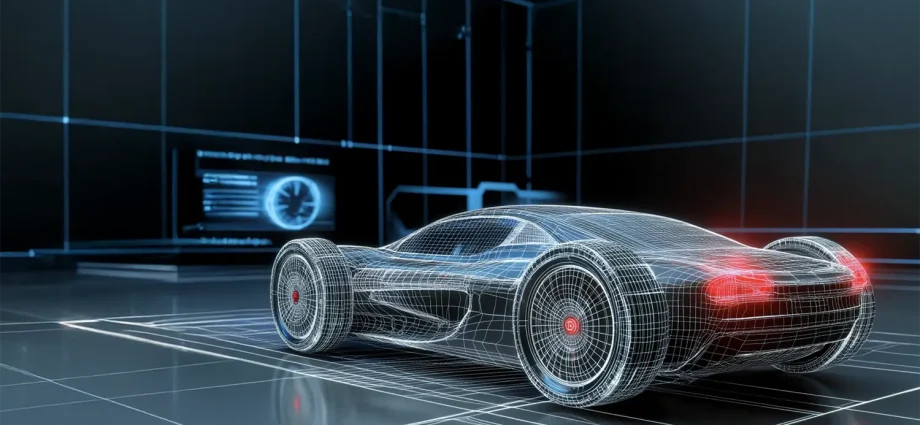
Your car isn’t just a car anymore. Honestly, it’s a smartphone on wheels—a rolling computer network packed with sensors, cameras, and internet connections. That’s amazing for navigation, entertainment, and safety. But here’s the deal: every digital door and window in that connected vehicle is a potential entry point for hackers and a data collection point for… well, someone.
Let’s dive into the dual-headed challenge facing drivers today: keeping the car secure from malicious attacks and understanding just what happens to the ocean of personal data these vehicles now generate.
The Digital Dashboard: A Hacker’s New Playground
Modern cars can contain over 100 separate electronic control units (ECUs)—little computers that manage everything from the engine and brakes to the infotainment and tire pressure. They talk to each other. And increasingly, they talk to the outside world via 4G/5G, Wi-Fi, and Bluetooth. This connectivity is the vulnerability.
Real-World Risks: It’s Not Just Theory
Security researchers have, for years, demonstrated chilling remote hacks. They’ve shown it’s possible to disable brakes, jerk the steering wheel, or shut down a motorway-speed engine—all from a laptop miles away. These are often “white hat” experiments, sure. But they prove the attack surface is vast.
Common attack vectors include:
- The Infotainment System: A malicious app or a compromised USB port can be a gateway to the car’s critical networks.
- Key Fob Replay/Relay Attacks: Thieves amplifying the signal from your key fob to unlock and start your car without a trace.
- Vulnerable Telematics: The always-on cellular connection for emergency services and remote features can be a backdoor if not properly secured.
- Third-Party Apps & Services: That insurance app tracking your driving for a discount? Or the connected maintenance tool? Each new connection is a potential weak link.
The Silent Passenger: Your Data Privacy
Maybe even more pervasive than the threat of a hack is the quiet, constant collection of your data. Think about it. Your car knows where you live, where you work, your daily routes, your driving speed, your music preferences, even your voice patterns and who you call.
This isn’t necessarily evil. This data can enable fantastic features: predictive maintenance, real-time traffic routing, automated crash response. The problem is the opacity. Most drivers have no clear idea what data is collected, who it’s shared with, or how long it’s stored.
| Data Type | Potential Use | Privacy Concern |
| Geolocation & Trip History | Navigation, traffic services | Reveals patterns of life, sensitive locations (health clinics, etc.) |
| Driving Behavior (hard braking, acceleration) | Insurance risk assessment, “safe driver” programs | Could lead to higher premiums or denied coverage |
| Biometric Data (driver attention, seat settings) | Personalization, safety alerts | Highly personal biological data; unclear ownership |
| Infotainment & Phone Data (contacts, call logs, app usage) | Hands-free integration | Massive personal profiling potential if aggregated |
This data is valuable. It’s gold for marketers, insurers, and data brokers. And the regulations—like GDPR in Europe or patchy state laws in the US—are struggling to keep up with the unique challenges of connected car data privacy.
Who’s Responsible? The Shared Security Burden
This isn’t a problem with one simple villain. The responsibility is, frankly, scattered.
- Automakers: They must build security in from the design phase (“security by design”), not bolt it on as an afterthought. They need to provide regular, over-the-air security updates—just like your phone does.
- Software & Component Suppliers: Every third-party chip and code library needs rigorous vetting. The supply chain is long and complex.
- Drivers/Owners: We have a role too. It means updating software when prompted, being cautious with third-party dongles and apps, and using strong passwords for connected services.
- Policymakers: Governments need to establish clear cybersecurity and data privacy standards for the automotive industry, with real teeth for enforcement.
What You Can Do: Practical Steps for Safer Driving
Feeling a bit overwhelmed? Don’t panic. You can take concrete steps to improve your own connected car security and privacy posture right now.
- Update, Update, Update: Treat those “Software Update Available” notifications in your car with the same urgency as you do on your phone. They often contain critical security patches.
- Audit Your Connected Services: Log into the carmaker’s app or portal. Review what services are active and what data sharing permissions you’ve granted. Disable anything you don’t actively use.
- Be Smart with Your Keys: Store key fobs in a Faraday pouch or a metal box at home to block relay attacks. It’s a simple, cheap fix.
- Minimize Data Sharing: When setting up a new car or service, opt out of data sharing where possible. The menus might be buried, but they’re often there.
- Ask Questions: Before you buy, ask the dealer or manufacturer: “What data does this car collect?” and “How long do you provide security updates?” Your questions signal that consumers care.
The Road Ahead: A Bumpy but Navigable Path
The evolution of the connected car is, you know, inevitable. The benefits in safety, convenience, and efficiency are simply too great. But the industry is at a crossroads. The next few years will determine whether we build a digital ecosystem for cars that is resilient and respectful—or one that’s fragile and invasive.
It requires a shift in mindset. From seeing security and privacy as compliance costs to seeing them as fundamental features—as important as horsepower or fuel economy. The car of the future must be not only autonomous or electric but also trustworthy.
We’re all passengers on this journey. And it’s one where staying alert, asking tough questions, and demanding better digital stewardship from manufacturers isn’t just for techies—it’s for every person who gets behind the wheel.